Become a Partner
Your polymer technology. Our plants in India.
We work with technology owners and strategic investors who want a compounding base in India: licensing, toll compounding, joint development, joint ventures and capacity expansion.
Mutual NDA before any technical or financial detail is shared.
- 1,975kg/hrnameplate across 4 twin-screw lines
- 2plantsowned, MET City, Jhajjar, Delhi NCR
- 150+gradesdeveloped in 4 years, 70-80% now in supply
- 48-72hoursfrom brief to trial formulation
Two ways to partner
Choose the track that fits. Each model can start small and grow into the next one.
Resin producers, compound and additive makers, recyclers and OEM material teams.
-
01
Toll compounding
Your formulation, our lines. We run your recipe under ERP control with a certificate of analysis on every lot.
- You bring
- Recipe, specification, approved raw materials
- We bring
- Line time, QC, packing, dispatch in India
-
02
Technology licensing
Produce your grades in India under licence, close to the vehicle and appliance plants that buy them.
- You bring
- Know-how, grade data, process window
- We bring
- Local production, approvals support, technical service
-
03
Joint development
Build new grades together for Indian and export programmes, from trial formulation to PPAP support.
- You bring
- Base polymer or additive technology
- We bring
- Laboratory, trial lines, customer access
-
04
Local supply and distribution
Reach Indian OEMs and Tier-1s through a compounder that already supplies them, with application support on the ground.
- You bring
- Product range, pricing, training
- We bring
- Customer relationships, warehousing, technical sales
Strategic investors, global compounders and family offices that want manufacturing exposure in India.
-
01
Capacity expansion
Fund new lines in our second unit, which has room for new volume, against a clear product and customer plan.
- You bring
- Capital, possibly offtake
- We bring
- Site, people, operating systems, customers
-
02
Joint venture
A dedicated company for a product line or market, with shared governance and a defined technology scope.
- You bring
- Capital and, often, technology
- We bring
- Plant base, team, market access
-
03
Strategic equity
A long-term stake in an Indian compounder with owned plants, a working laboratory and blue-chip customers since 2010.
- You bring
- Capital, board perspective, network
- We bring
- Operating business, growth plan
-
04
Phased entry
Start with toll compounding, move to a dedicated line, then decide on a joint venture once both sides have the data.
- You bring
- A first product to localise
- We bring
- A low-risk path from trial to scale
What you plug into
A working compounding business, not a plan on paper.
-
Plants
Two owned plants, four twin-screw lines
Line A 1,250 kg/hr high output. Line B 400 kg/hr high torque for glass fibre and high-performance grades. Line C 250 kg/hr for glass, mineral and flame-retardant grades. Line D 75 kg/hr for R&D and small batches.
-
Laboratory
Every batch tested before dispatch
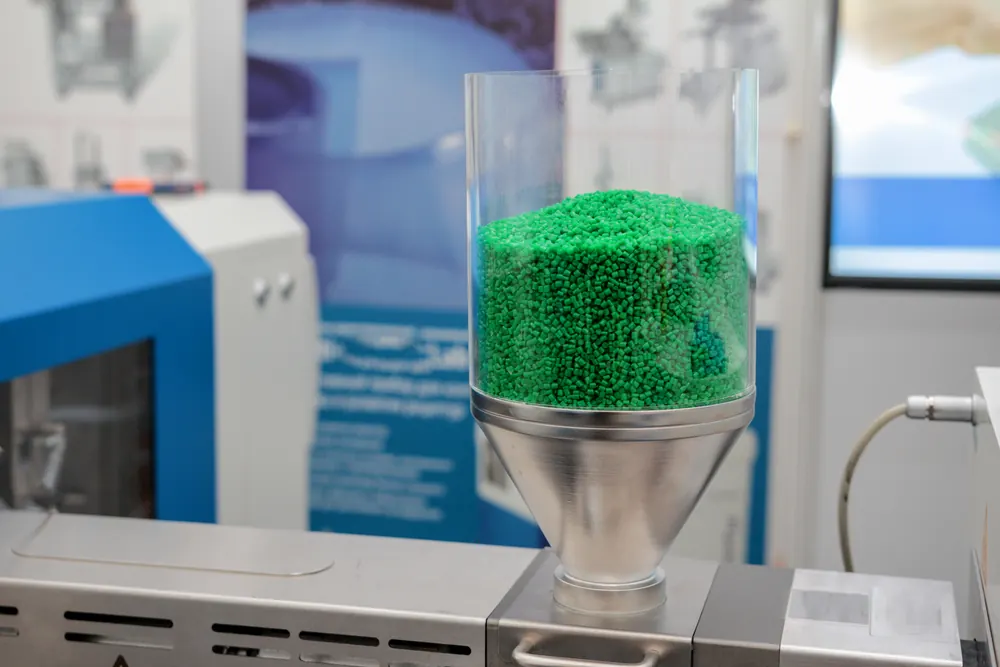
DSC, FT-IR, MFI, UTM, Izod and Charpy impact, HDT and Vicat, spectrophotometer and glow-wire, in-house.
-
Speed
Trial formulation in 48-72 hours
150+ grades developed in four years, 70-80% of them converted to commercial supply.
-
Control
ERP recipes and batch genealogy
From raw material to shipment, with a certificate of analysis on every lot. ISO 9001:2015, ZED, RoHS and REACH declarations.
-
Customers
OEMs and Tier-1s since 2010
Maruti Suzuki, Tata Motors, Mahindra, Nissan, JCB, Panasonic, Uno Minda, Hella and others.
-
Location
MET City, Jhajjar, Delhi NCR
On the KMP Expressway corridor, about an hour from Delhi airport, in one of India's largest car-making regions. Exports to Taiwan, Thailand, Vietnam, South Africa and Mexico.
Why India, why now
Demand is local, imports are high and the trade rules have opened. Every figure below links to its source.
- 4.3Mpassenger vehicles sold in India in FY2024-25, a recordSIAM via DD News, Apr 2025
- USD 80.2bnauto component industry turnover, FY2024-25ACMA via Business Today, Jul 2025
- 2.45M+electric vehicles sold in FY2025-26, up 25%Autocar Professional, Apr 2026
- USD 31bnchemical trade deficit in 2023, a gap local production can closeNITI Aayog, Jul 2025
Analysts put India's engineering-plastics market between USD 3.8 billion and USD 6.5 billion, growing about 7% a year. Estimates differ by scope. BlueWeave, Mordor Intelligence, MarketsandMarkets
The rules are open
A summary for orientation. Structures are always confirmed with your advisers.
All Around Polymer is a limited liability partnership. Foreign investment can come in as LLP contribution where the sector allows it, or through a new company or joint venture. Investors from countries that share a land border with India need government approval above a 10% non-controlling stake.
| Topic | Status | Since |
|---|---|---|
| Foreign investment in manufacturing and chemicals | 100% under the automatic route, except a short list of hazardous chemicals | FDI Policy |
| Royalties and technology fees | Paid abroad under the automatic route, no percentage cap | 2010 |
| India-Japan CEPA | In force | 1 Aug 2011 |
| India-EFTA TEPA | In force | 1 Oct 2025 |
| India-UK CETA | In force | 15 Jul 2026 |
| India-EU FTA | Negotiations concluded, signing pending | 27 Jan 2026 |
How global firms built in India
Public examples of the routes international compounders have taken. None of them is an AAP partner.
- 2011Acquisition
Rhodia (Solvay) bought an engineering-plastics compounding business in Panoli, Gujarat, its first compounding capacity in India.
- 2012Greenfield
Lanxess opened a 20,000 t/yr polyamide and PBT compounding plant at Jhagadia, Gujarat. The business is now part of Envalior.
- 2013Majority stake
Kingfa bought 66.5% of a Chennai PP compounder, today Kingfa Science & Technology India.
- 2019Greenfield
Toray started PA and PBT compounding at Sri City, Andhra Pradesh, as a base for India and Southeast Asia.
- 2026Joint venture
Teknor Apex and DCM Shriram formed a 50/50 compounding joint venture: global formulation know-how plus an Indian manufacturing base.
The pattern is clear: foreign technology plus a local plant, customers and team. That is the role we offer.
How a partnership starts
- 01
First call
A 30-minute call to test the fit: product, market and partnership model.
- 02
Mutual NDA
Signed before any formulation, process or financial data changes hands.
- 03
Review and site visit
Documents shared under NDA, then a plant and laboratory walk in Jhajjar.
- 04
Pilot or term sheet
A toll-compounding trial for technology partners, a term sheet for investors.
- 05
Agreement
Licence, supply, joint-venture or investment agreement, drafted with both sides' counsel.
What you can review, and when
We prepare the documents so diligence moves at your pace.
01Open now
- Company and plant overview (company profile)
- ISO 9001:2015 certificate
- Material families and published grades
- Awards and customer list
02After a mutual NDA
- LLP registration and statutory filings
- Financial statements
- GST and statutory compliance records
- Quality manual, control plans, test methods
- Capacity, utilisation and expansion plan
03On site in Jhajjar
- Plant and process walk on all four lines
- Laboratory and batch records
- Raw material storage and traceability
- Meetings with the operations and quality teams
IATF 16949: gap assessment scheduled. We will say so plainly in every conversation.
Your know-how stays yours
NDA first
A mutual NDA, signed before any technical data is shared. Your template or ours.
Named access
We agree in writing who sees your formulation and process data.
Clear ownership
Licence and development agreements state who owns new grades and improvements.
Contract-based protection
India protects confidential information through contracts and breach-of-confidence claims, so we put every protection in writing.
Partner questions
Who do you want to partner with?
Resin, compound and additive producers, recyclers and OEM material teams looking for production in India, and strategic investors who want to fund capacity or a joint venture.
Can we start small?
Yes. Most technology partnerships start with a toll-compounding trial on one grade. If the data and the demand are there, the next step is a dedicated line or a joint venture.
Can foreign companies invest in an Indian compounder?
India allows 100% foreign investment in manufacturing and in chemicals under the automatic route, except a short list of hazardous chemicals. AAP is an LLP, so the structure (LLP contribution, new company or joint venture) is agreed case by case with advisers on both sides.
What if our company is from a country that borders India?
Investment from countries that share a land border with India needs government approval. Since 2026, non-controlling stakes below 10% can use the automatic route with reporting. Technology licensing and toll compounding do not involve equity.
How is our intellectual property protected?
A mutual NDA comes first. Licence and development agreements then set ownership, permitted use and named access. India has no separate trade-secrets law, so protection is contractual, and we write it down in detail.
Can royalties be paid out of India?
Yes. Royalties and technology fees under a foreign technology agreement are paid under the automatic route, subject to tax and foreign-exchange rules.
What capacity is available?
Our four lines have a combined nameplate of 1,975 kg/hr, and our second unit has room for new lines. We share utilisation and slots under NDA.
Can we meet you in person?
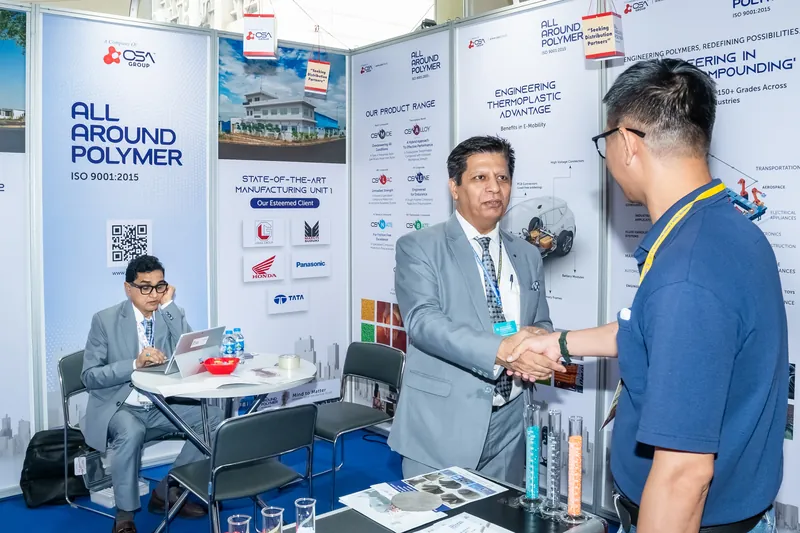
Yes. Visit our plants in MET City, Jhajjar, about an hour from Delhi airport, or meet us at IPF Japan 2026, Makuhari Messe, 1 to 5 December 2026, booth 10707.
Start a confidential conversation
Your email and phone are enough to begin. We reply within one working day, and nothing technical is shared before a mutual NDA.
- Reply within one working day
- Mutual NDA before details
- Plant visits in Jhajjar or meetings in Tokyo
Partnership enquiry
Sources. Figures are third-party estimates or official data as published on the dates shown. This page is not legal or investment advice.